
Introduction
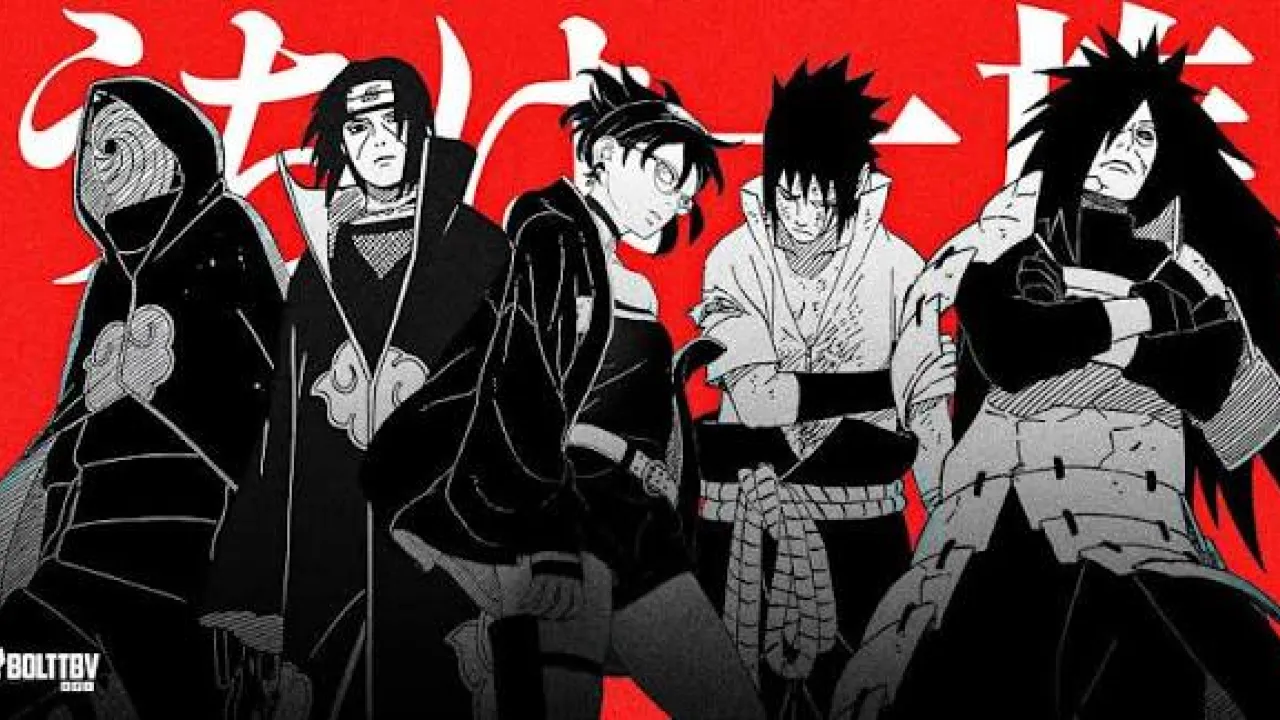
The Uchiha clan is one of the most iconic and tragic families in the Naruto universe. Known for their exceptional combat skills, the Sharingan dōjutsu, and a legacy of both greatness and suffering, the Uchiha have shaped the history of the ninja world. From the legendary Madara to the redemption of Sasuke, and now Sarada in Boruto: Two Blue Vortex, the clan’s story is far from over. In this deep dive, we explore their origins, techniques, role as Konoha’s police force, the heartbreaking massacre, and what the future holds for the last Uchiha.
The Origins and Clan Symbol
The Uchiha clan descended from Indra Ōtsutsuki, the elder son of the Sage of Six Paths. Indra inherited his father’s powerful chakra and eyes, which eventually evolved into the Sharingan. The clan’s name itself derives from the Japanese word for “fan,” which is also their family crest—a red and white uchiwa fan. The fan symbolizes their control over fire, as they can fan flames into greater strength. It’s an emblem of pride, but also a reminder of the flame of hatred that has burned within their history for generations.
The Sharingan and Powerful Techniques
The Uchiha are synonymous with the Sharingan, a dōjutsu that grants heightened perception, the ability to copy techniques, and see through illusions. When a user experiences great emotional trauma, the Sharingan can evolve into the Mangekyō Sharingan, unlocking devastating abilities unique to each wielder. Itachi’s Tsukuyomi and Amaterasu, Sasuke’s Blaze Release and Susanoo, and Obito’s Kamui are all products of this evolution. The Rinnegan, the ultimate eye, was achieved only by Madara and Sasuke after combining Uchiha and Senju powers. But the cost is heavy—overuse leads to blindness unless augmented by a sibling’s eyes, granting the Eternal Mangekyō Sharingan.
The Konoha Military Police: Protectors or Pawns?
In the early days of Konohagakure, the Uchiha clan was appointed as the military police force. This gave them authority to maintain order within the village, but it also isolated them from the center of political power. Over time, this isolation bred suspicion and resentment. Even well-intentioned Uchiha like Itachi found themselves trapped between duty to their clan and loyalty to the village. The police headquarters stood as a symbol of their dual role: protectors on the surface, but increasingly seen as a potential threat by the village leadership.
The Uchiha Massacre: A Tragedy in the Night
The tension culminated in the Uchiha Clan Downfall, a planned coup d’état that would have ignited a civil war. To prevent a greater catastrophe, Itachi Uchiha—at just 13 years old—was ordered by Konoha’s elders to annihilate his entire clan. He carried out the mission with cold precision, but spared his younger brother Sasuke, hoping he would one day kill him and avenge the clan. The massacre remains one of the most painful chapters in Naruto, revealing the dark underbelly of shinobi politics and the tragic irony of Itachi’s sacrifice.
Survivors and the Road to Redemption
While Sasuke was the only survivor intended by Itachi, others clung to life through extraordinary circumstances. Obito Uchiha (then posing as Madara) had faked his death years earlier and assisted Itachi in the massacre. Yet he emerged as a villain, twisted by loss. Sasuke’s journey from avenger to protector is the core of his redemption arc. In Boruto, Sasuke has become a wandering shadow Hokage, atoning for his sins. The clan’s future rests on Sakura and Sasuke’s daughter, Sarada—an Uchiha determined to become Hokage, not out of vengeance but inspired by the will of fire.
Sarada Uchiha in Boruto: A New Hope
In Boruto: Two Blue Vortex, Sarada Uchiha stands as a beacon of hope. She has awakened her Mangekyō Sharingan under traumatic circumstances, though its abilities remain largely a mystery. Unlike previous generations, Sarada is not burdened by hatred; she fights to protect her friends and her village. Her bond with Boruto and her unwavering belief in her father’s innocence—even when the world turned against him—showcases a maturity beyond her years. She is rewriting what it means to be an Uchiha, channeling the clan’s passion toward love rather than revenge.
Personal Reflection: The Loss of Itachi
As a long-time fan, I have to admit: I’m still heartbroken over Itachi’s death. His story is a masterpiece of tragedy, and while I understand the narrative necessity, I often imagine a different ending. Part of me wished for a path where Itachi killed Sasuke as he was ordered—a dark twist that would have cemented his role as a villain. But my ideal scenario? Both brothers alive, working together to dismantle the corrupt system that forced such a cruel choice. Itachi’s wisdom and Sasuke’s drive could have changed the world even sooner. That dream never came true, but their brief final moments together remain some of the most powerful in anime history.
Conclusion: The Eternal Legacy
From Indra’s chakra to Sarada’s Hokage dream, the Uchiha clan has evolved from a symbol of hatred to a beacon of hope. Their techniques, once weapons of war, are now tools for protecting the village. The massacre’s scars will never fully heal, but the survivors have forged a new path. The Uchiha flame, much like their fan, will continue to fan outward—not to destroy, but to illuminate the future.