
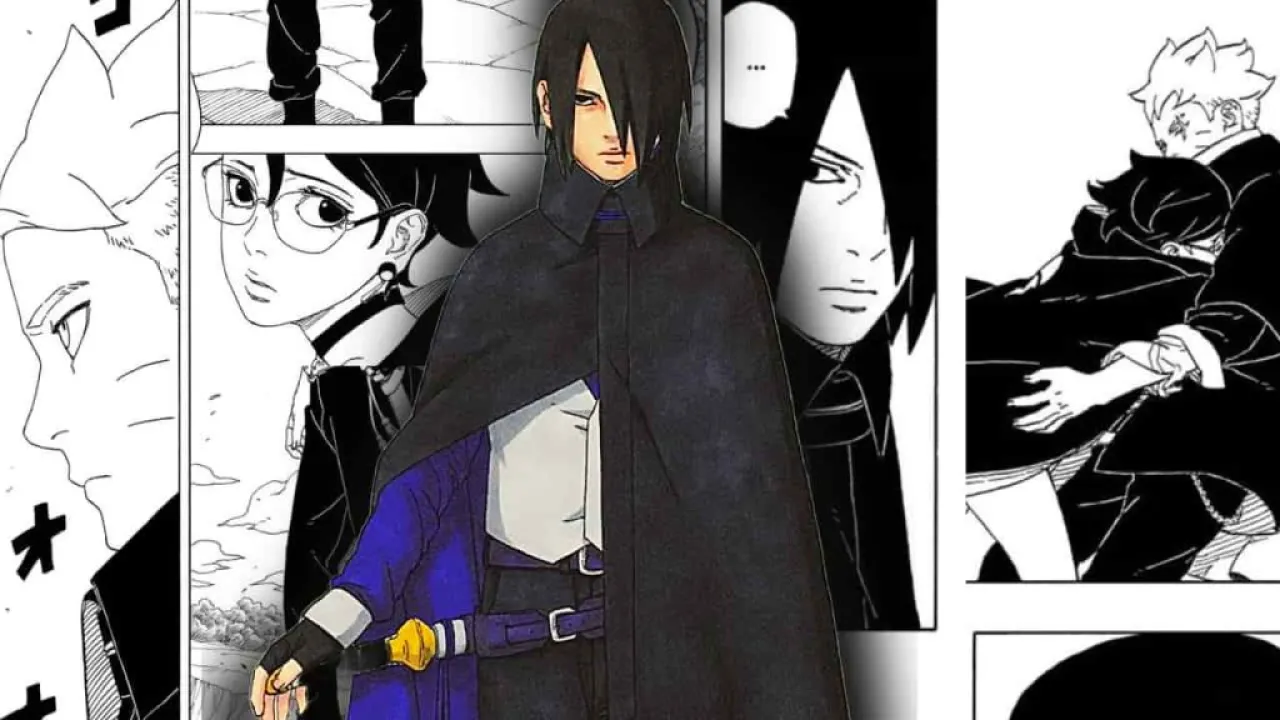
Few anime characters embody a journey of pain, vengeance, and ultimate redemption quite like Sasuke Uchiha. From his tragic childhood to his pivotal role in the Boruto era, Sasuke’s path is one of the most compelling arcs in the Naruto universe. Whether you call him a prodigy, an avenger, or a hero, his story is a testament to the power of choice and the possibility of change. In this editorial, we trace Sasuke’s life from his earliest days as the last Uchiha to his current status in Boruto: Two Blue Vortex, examining his family legacy, his motivations, and the fearsome abilities that define him.
The Last Uchiha: A Childhood Shrouded in Tragedy
Sasuke Uchiha was born into the esteemed Uchiha clan, one of the founding families of the Hidden Leaf Village. The Uchiha were known for their powerful Sharingan and their fierce pride. Sasuke’s early years were marked by a deep admiration for his older brother, Itachi, a prodigy who graduated from the Academy at the top of his class. However, the idyllic childhood shattered when Sasuke was just seven years old. One night, Itachi massacred the entire Uchiha clan, leaving only Sasuke alive. The trauma of witnessing his parents’ deaths and his brother’s cold betrayal ingrained a singular obsession in young Sasuke: revenge.
Itachi’s parting words—that Sasuke lacked hatred and was not worth killing—became the fuel for his younger brother’s existence. Sasuke’s sole goal became gaining enough power to kill Itachi and restore the Uchiha name. This desire for vengeance isolated him, driving him to emotionally detach from those around him. As a child, he was already showing signs of the brooding, solitary warrior he would become, even as he entered the Ninja Academy as the top student, hailed as a genius. His mother Mikoto’s gentle warmth and father Fugaku’s strict expectations were memories that haunted him, pushing him ever closer to the darkness.
The Path of Revenge: From Genin to Avenger
Sasuke’s time with Team 7—Naruto Uzumaki, Sakura Haruno, and Kakashi Hatake—initially tempered his lone-wolf mentality. The bonds he formed, especially with Naruto, awakened a flicker of camaraderie he hadn’t felt since his family’s death. However, the desire for power to defeat Itachi never faded. After encountering his brother and being utterly humiliated, Sasuke became impatient with Konoha’s pace. Orochimaru’s offer of power lured him away, and Sasuke defected from the village, severing his bonds. His time under Orochimaru sharpened his skills drastically: he mastered various jutsu, including the Chidori, and his Sharingan evolved through intense training. Ultimately, Sasuke surpassed Orochimaru, absorbing his knowledge and forming his own team, Hebi (later Taka), to track down Itachi.
The long-awaited battle with Itachi ended in a tragic revelation: Itachi had been ordered by the village leaders to annihilate the Uchiha clan to prevent a coup, and he had spared Sasuke out of love, hoping his brother would one day kill him and become a hero. This truth shattered Sasuke’s world yet again, but instead of turning him back to Konoha, it ignited a burning hatred for the village that had sacrificed his family. Sasuke’s goals mutated—he now sought to destroy Konoha and then reshape the shinobi world to prevent such tragedies. This period marked his descent into darkness, culminating in his attack on the Five Kage Summit, where he fully embraced the Mangekyo Sharingan and its deadly powers, including Amaterasu and Susanoo.
Redemption and Legacy: Sasuke in the Boruto Era
After the Fourth Great Ninja War, Sasuke’s path took a redemptive turn. Thanks to Naruto’s relentless refusal to give up on him, Sasuke finally let go of his hatred. He accepted the truth about Itachi’s sacrifice and chose to protect the village his brother died for. However, Sasuke did not simply return to Konoha as a normal citizen. Guilt-ridden and seeking to atone, he embarked on a journey of self-discovery and protection, traveling the world to uncover threats like the Otsutsuki clan. This self-imposed exile earned him the unofficial title of the "Shadow Hokage"—defending the Leaf from the shadows, mirroring Naruto’s role as the public Hokage.
Sasuke’s personal life evolved as well. He married Sakura, and they had a daughter, Sarada, who inherited the Uchiha bloodline and the Sharingan. Distance strained the relationship—Sasuke’s long absences left Sarada with questions about her father, but their bond deepened when he trained her and acknowledged her dream to become Hokage. In the Boruto series, Sasuke takes on a more direct mentorship role with Boruto Uzumaki, Naruto’s son, becoming a father figure not only to his own child but also to the next generation. In the latest timeline, Boruto: Two Blue Vortex, Sasuke faces an unprecedented crisis: a false narrative has painted Boruto as a criminal and Kawaki as Naruto’s true son. Sasuke, ever the astute shinobi, defies the altered memories and trusts Boruto, risking everything to stand by him. This unwavering loyalty echoes his own journey—someone who was given a second chance, now extending that chance to another.
Sasuke’s Arsenal: A Warrior Without Equal
Sasuke’s growth in power is nothing short of legendary. Starting with the basic Fire Style jutsu of his clan, he rapidly expanded his repertoire. His signature technique, the Chidori (and its later variants, like the Chidori Stream or the long-range Chidori Sharp Spear), became a lethal weapon. The Sharingan allowed him to copy techniques and read movements, while the Mangekyo Sharingan granted him Amaterasu (unquenchable black flames) and the ability to manipulate them with Kagutsuchi. His Susanoo, a colossal ethereal warrior, reached its perfect form, capable of rivaling even the tailed beasts. After receiving half of Hagoromo Otsutsuki’s power, Sasuke awakened the Rinnegan in his left eye, granting him access to space-time ninjutsu like Amenotejikara, which lets him instantly swap objects or himself within range. This eye also enabled him to perceive threats from other dimensions, pivotal in the battle against Kaguya.
In close combat, Sasuke is a master swordsman, wielding his chokuto with deadly precision. His taijutsu, combined with the Sharingan’s predictive abilities, makes him nearly untouchable. Despite losing his left arm in the final valley clash with Naruto, Sasuke adapted his fighting style to be one-armed, proving his resilience. Over time, his Rinnegan’s power has dwindled due to its destruction in a fight against Isshiki, but even without it, Sasuke remains one of the most formidable shinobi alive. His strategic mind, honed by years of solo missions, sets him apart—he often unravels complex conspiracies before others even notice them.
Conclusion: The Enduring Impact of Sasuke Uchiha
Sasuke Uchiha’s story is a masterclass in character development. He transforms from a vengeance-driven child to a selfless guardian, never forgetting his roots or the pain that shaped him. His legacy is not just in the battles he fought, but in the lives he touched—Naruto, Sakura, Sarada, and Boruto all carry pieces of his journey. In Boruto: Two Blue Vortex, Sasuke’s role as a mentor and moral anchor proves that redemption is an ongoing choice, not a single moment. As the shinobi world continues to evolve, one thing remains certain: the last Uchiha will forever stand in the shadows, protecting the light.