
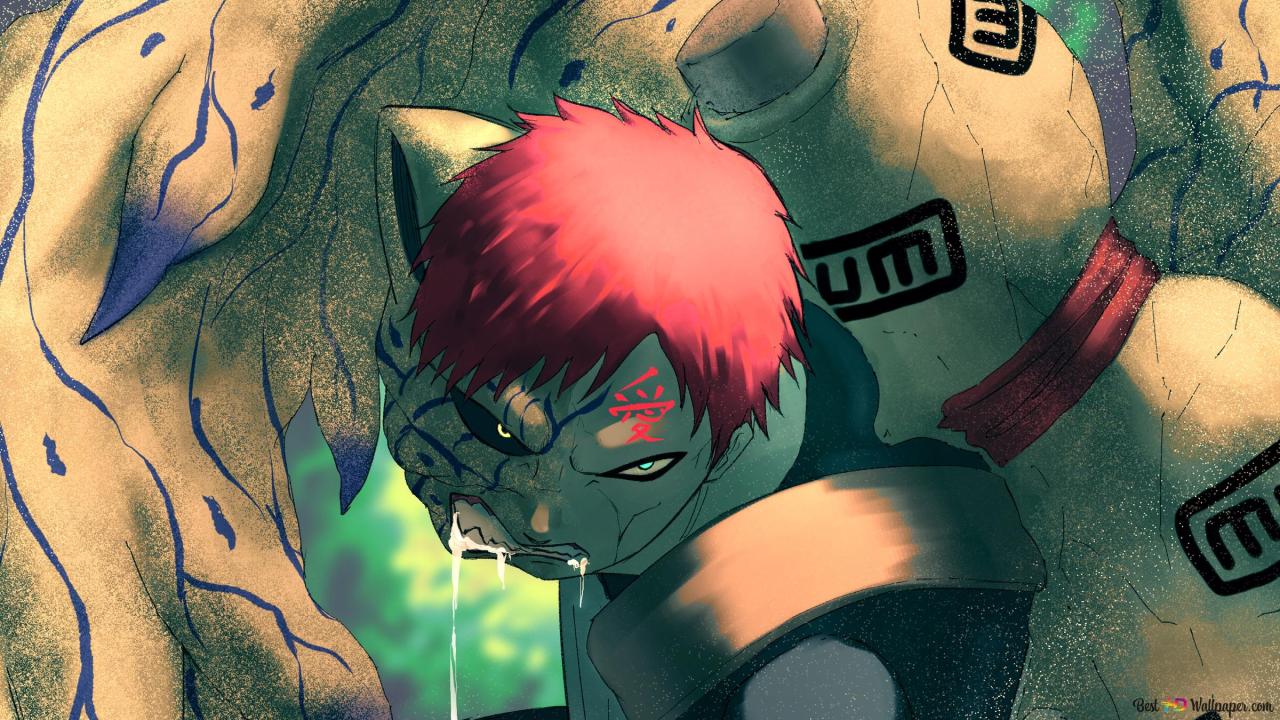
In the vast universe of Naruto, few characters have undergone a transformation as profound and emotionally stirring as that of Gaara. Introduced as a terrifying antagonist with a psychotic edge, Gaara evolved into one of the most beloved and respected leaders in the shinobi world. His story is a powerful narrative of redemption, built on pain, loneliness, and the healing power of connection. From a child shunned by his village to the revered Fifth Kazekage, and now a guiding father figure in Boruto: Two Blue Vortex, Gaara's path is a masterclass in character development.
The Boy Who Was Made into a Monster
Gaara's tragic origin lies in the desert sands of Sunagakure. Before birth, he was made into the jinchuriki of the One-Tailed Beast, Shukaku, as part of his father's plan to create the ultimate weapon. But this power came at a terrible price. His mother, Karura, died during childbirth, cursing the sand to protect him eternally. Isolated and feared by the villagers who saw him only as a monster, Gaara grew up believing that love was a lie. The only person who showed him affection — his uncle Yashamaru — attempted to assassinate him on the Kazekage's orders, shattering Gaara's faith entirely and cementing his belief that he existed only to kill and be alone. His sand became both a shield and a weapon, a reflection of his tormented soul.
The Fateful Encounter with Naruto Uzumaki
Gaara's descent into pure malice was halted during the Chūnin Exams in Konoha. There, he met Naruto Uzumaki, a boy who carried the same terrible burden of being a jinchuriki yet fought to protect his precious people. Their brutal clash in the forest and later in the arena was more than a battle of strength — it was a collision of worldviews. Naruto’s unwavering determination to defend his friends, even when overwhelmed by Gaara’s monstrous power, struck a deep chord. When Naruto crawled toward him, bleeding and exhausted, shouting that he understood Gaara’s pain, the walls Gaara had built around his heart began to crack. It was the first time someone acknowledged his suffering without fear. This encounter planted the seeds of change, teaching Gaara that strength could be used to protect, not just to destroy.
The Rise of the Fifth Kazekage
After the failed invasion of Konoha, Gaara returned to Suna a broken but humbled figure. With the steadfast support of his siblings Temari and Kankurō, he began to rebuild his identity. He dedicated himself to the village, seeking forgiveness and proving his worth through countless missions. His genuine remorse and newfound compassion slowly earned the trust of the Sand shinobi. At the remarkably young age of 15, Gaara was appointed the Fifth Kazekage — not just as a symbol of power, but as a beacon of change. His ultimate test came when the Akatsuki captured him to extract Shukaku. Even in the face of death, Gaara reflected on his life and found peace, believing he had finally been loved. His rescue by Naruto and the Sand Village’s united effort solidified his bond with his people, and his resurrection through Granny Chiyo’s sacrifice gave him a second chance to lead with a heart full of gratitude.
Gaara's Power and Unwavering Will
Despite losing Shukaku, Gaara’s strength only grew. His innate ability to manipulate sand remained, a gift from his mother’s love that transcended the tailed beast. His absolute defense, sand coffin burial, and vast offensive capabilities made him a force to be reckoned with even without the One-Tail. During the Fourth Shinobi World War, Gaara became a lynchpin, leading the Allied Shinobi Forces and uniting the villages with moving speeches that echoed Naruto's philosophy. His sand shielded thousands, and his calm, strategic mind turned the tide in pivotal battles. More impressively, Gaara’s true strength lies in his emotional resilience — the same boy who once craved only bloodshed became a diplomatic leader who could stand before the five Kage and advocate for cooperation over conflict.
A Father's Love: Gaara and Shinki in the Two Blue Vortex Era
In the Boruto series, Gaara’s growth is perhaps most tenderly expressed through his relationship with his adopted son, Shinki. A gifted young shinobi who wields Iron Sand — an homage to the Third Kazekage — Shinki initially mirrored a young Gaara in his stoic demeanor and lethal precision. But Gaara, drawing from his own painful childhood, raised Shinki with patience, love, and understanding, ensuring the boy never felt the same isolation. Their bond is a quiet but powerful testament to Gaara’s redemption; he became the father that his own childhood never had. In Boruto: Two Blue Vortex, as the shinobi world faces new threats, Gaara remains a guiding force, his legacy secure not only in the Sand Village’s prosperity but in the heart of a son who carries forward his iron will and compassion.
Conclusion
Gaara’s journey from a hatred-fueled weapon to a wise and loving Kazekage is one of Naruto’s most enduring stories. It reminds us that no one is beyond redemption and that the deepest wounds can heal through empathy and connection. From a monster the world feared to a hero the world respects, Gaara stands as a testament to the transformative power of love — a message that continues to resonate powerfully in every grain of sand he commands.