The world of Naruto is built upon a rich tapestry of mystical arts known as jutsu. These techniques, fueled by chakra, define the capabilities of shinobi, ranging from elemental attacks to reality-warping ocular powers. Understanding the different types of jutsu is essential for any fan who wants to grasp the depth of the series’ combat system. In this guide, we break down every major category, from the foundational three to the divine techniques introduced in Boruto.
The Three Main Arts (Sanjutsu)
At the core of shinobi training lie the Sanjutsu: Ninjutsu, Genjutsu, and Taijutsu. Almost every technique falls under one of these umbrellas, and mastering them is the mark of a well-rounded ninja.
Ninjutsu
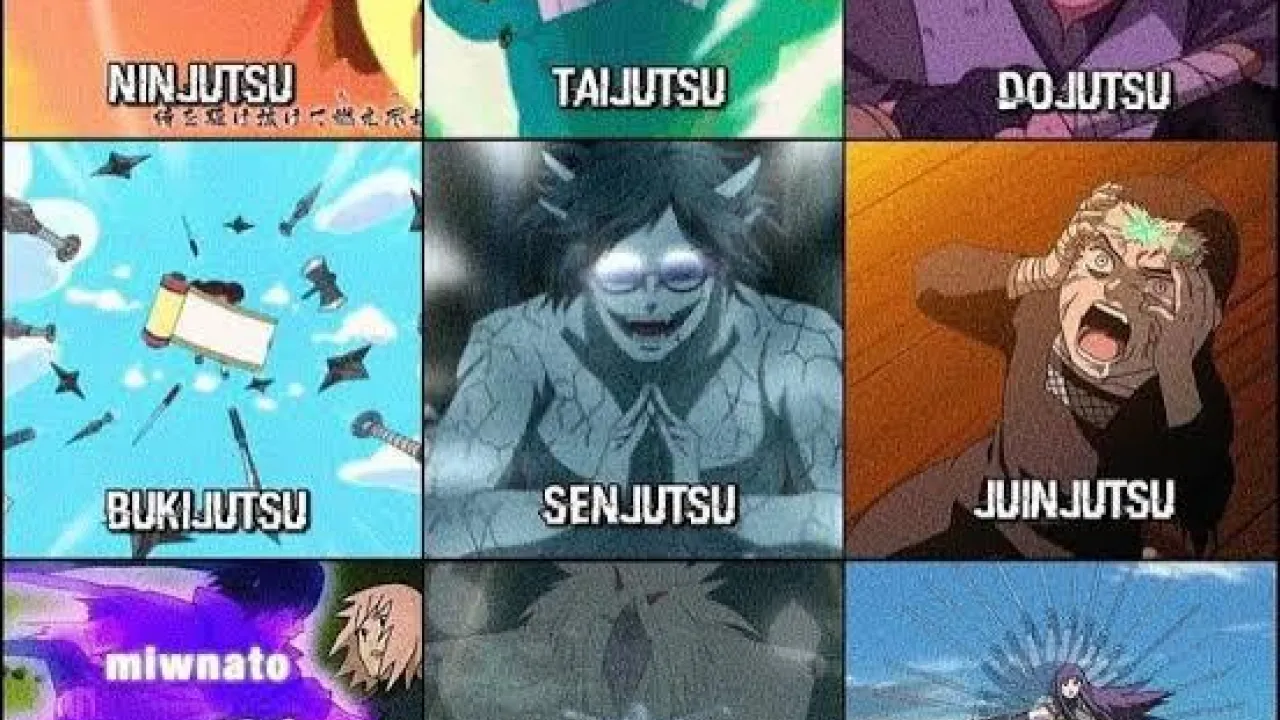
Ninjutsu involves creating real physical effects through chakra manipulation. It is the broadest category, encompassing elemental releases (Fire, Water, Earth, Wind, Lightning) and non-elemental techniques like the Rasengan or Shadow Clone Jutsu. By weaving hand signs, a user can shape chakra to launch fireballs, raise earth walls, or even summon giant toads. Advanced ninjutsu requires precise chakra control and often combines multiple elements.
Genjutsu
Unlike ninjutsu, genjutsu targets the opponent’s mind rather than body. By distorting the chakra flow in the brain, a user creates illusions that manipulate all five senses. The Sharingan’s Tsukuyomi can trap victims in a timeless mental prison, while non-ocular genjutsu like Demonic Illusion: Tree Binding Death paralyzes foes. Breaking genjutsu typically requires disrupting one’s own chakra flow or receiving external aid.
Taijutsu
Taijutsu is hand-to-hand combat relying purely on physical prowess, stamina, and martial skill. It uses little to no chakra, making it effective against enemies who can absorb ninjutsu. Styles range from the Eight Gates technique that unleashes the body’s limits to the Gentle Fist of the Hyūga clan, which directly attacks an opponent’s chakra network.
Advanced and Specialized Jutsu
Beyond the basics lie specialized arts that push the boundaries of chakra use. These techniques often carry greater risk or require rare talents.
Senjutsu
Senjutsu blends internal chakra with natural energy drawn from the environment. Mastering Sage Mode grants immense physical boosts and sensory perception. Training at Mount Myōboku or Ryūchi Cave is necessary to avoid turning to stone. Naruto’s Sage Mode and Kabuto’s snake sage form exemplify its power.
Fūinjutsu and Jūinjutsu
Fūinjutsu (Sealing Techniques) lock away objects, chakra, or even living beings. The Dead Demon Consuming Seal sealed the Nine-Tails, while storage scrolls are everyday examples. Jūinjutsu (Cursed Seals) are a dark subset used to control or empower individuals—Orochimaru’s Cursed Seal of Heaven forces a transformation boost in exchange for mental corruption.
Kinjutsu
Kinjutsu are forbidden techniques, outlawed due to their extreme cost or moral implications. Edo Tensei revives the dead as immortal slaves, and the Shadow Clone Jutsu is forbidden to most because it can drain all chakra instantly. Learning kinjutsu often carries severe punishment.
Iryō-ninjutsu
Medical ninjutsu focuses on healing and body modification. Tsunade’s Creation Rebirth rapidly regenerates tissue, while Chiyo’s One’s Own Life Reincarnation can transfer life force to the dying. Combat medics can also use chakra scalpels for precise surgical strikes.
Bukijutsu and Kenjutsu
Bukijutsu refers to armed combat styles using weapons like shuriken, kunai, and giant paper bombs. Kenjutsu is a subset dedicated to swordsmanship, exemplified by Killer Bee’s Seven-Sword Dance and Sasuke’s Chidori-infused katana. Many elite shinobi channel elemental chakra through their weapons for devastating effects.
Space–Time Ninjutsu
One of the rarest subsets, space–time ninjutsu allows teleportation or dimensional warping. Minato’s Flying Thunder God instantly shifts him to marked locations, and Obito’s Kamui transports objects to a pocket dimension. These techniques ignore distance and conventional defense.
Jujutsu and Clan-Based Taijutsu
Jujutsu in Naruto is an informal term for clan-specific taijutsu styles. The Hyūga’s Gentle Fist (Jūken) uses chakra bursts to seal tenketsu points, effectively disabling an enemy’s chakra network. The Akimichi’s Partial Expansion Jutsu also falls under this category, using calorie-chakra conversion for body modification.
Genetic and Inherited Abilities
Some techniques cannot be taught—they are written into the user’s bloodline or anatomy.
Kekkei Genkai
Kekkei genkai are inherited abilities that allow the combination of two elemental natures or unique bodily transformations. Ice Release (water + wind) of Haku, Wood Release (earth + water) of Hashirama, and Kimimaro’s Dead Bone Pulse are classic examples. Dojutsu like the Sharingan also fall under this category but deserve separate attention.
Kekkei Tōta and Kekkei Mōra
A step beyond kekkei genkai, kekkei tōta fuses three elements. The Particle Style (earth + wind + fire) used by Ōnoki can disintegrate matter at a molecular level. Kekkei mōra is the most primordial tier, exclusive to Kaguya Ōtsutsuki, enabling her to wield expansive truth-seeking balls and manipulate space-time.
Dōjutsu
Dōjutsu are ocular kekkei genkai that grant visual prowess and unique techniques. The Sharingan copies movements and casts hypnosis; its evolved Mangekyō unlocks powers like Susanoo or Amaterasu. The Byakugan provides near-360° telescopic vision and the ability to see chakra networks. The legendary Rinnegan grants control over the Six Paths of Pain and access to resurrection and gravity manipulation. Each eye has rare evolutions like the Rinne-Sharingan or Jōgan.
Other Notable Concepts
The Naruto universe also introduces philosophical and divine aspects of chakra techniques that transcend standard jutsu classifications.
Ninshū
Before ninjutsu was weaponized, the Sage of Six Paths created Ninshū, a creed meant to connect people’s spiritual energies, fostering understanding and peace. It was later corrupted into the combat-oriented ninjutsu system used today, though remnants like the Uchiha’s Stone Tablet survive.
Shinjutsu
Introduced in Boruto, Shinjutsu are divine techniques used by the Ōtsutsuki clan. Unlike normal jutsu that require hand signs and chakra shaping, shinjutsu can manifest phenomena purely through will. Ada’s Omnipotence can rewrite memories on a global scale, while Daemon’s Reflection turns any attack back on the attacker. These abilities blur the line between technique and miracle.
Reincarnation and Regeneration
Reincarnation techniques appear in multiple forms. Edo Tensei is a kinjutsu that binds souls to vessels; Nagato’s Gedo Art of Rinne Rebirth fully resurrects the dead at the cost of the user’s life. Regeneration is also a recurring theme—the Ten-Tails and jinchūriki can regrow limbs, while Tsunade’s Strength of a Hundred Seal triggers accelerated healing.
The Naruto franchise’s power system is one of the most intricate in anime, constantly expanding from classic ninja arts to cosmic-level powers. Whether you’re analyzing a fight or creating your own OC, understanding these jutsu categories deepens your appreciation for Masashi Kishimoto’s world. As the story continues in Boruto, the boundaries of what a jutsu can achieve are pushed even further, promising new layers to explore.