
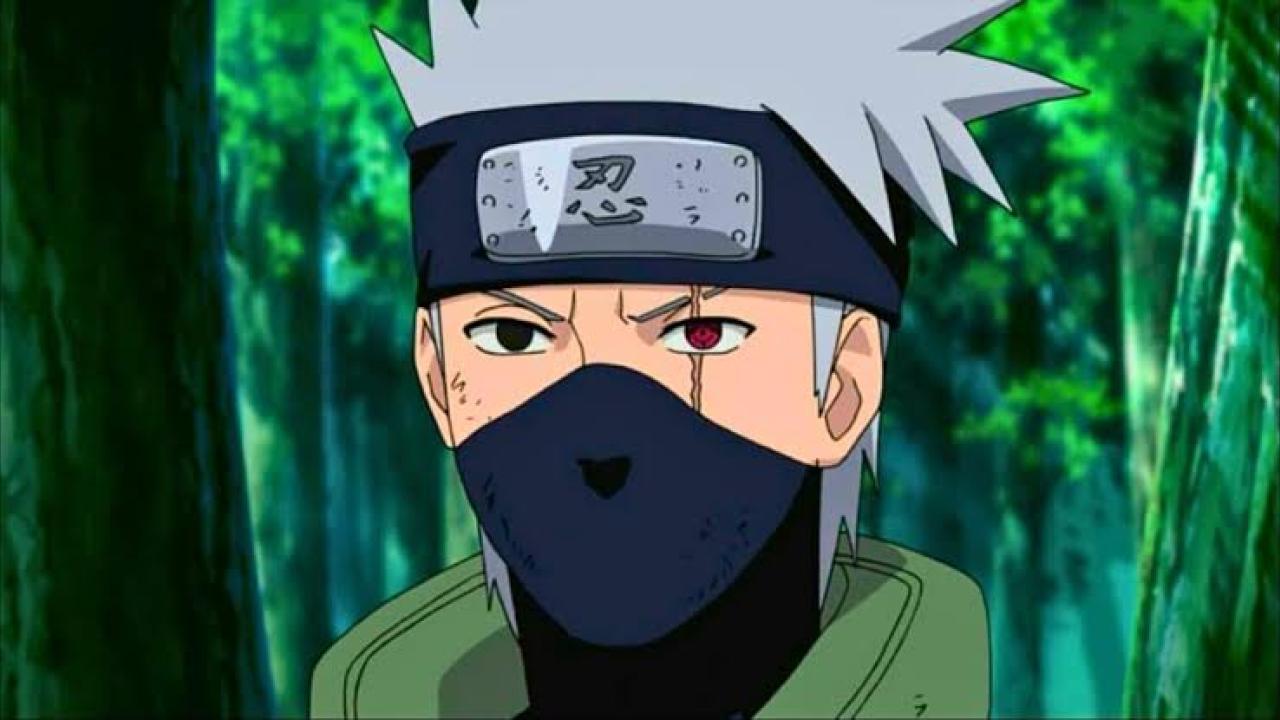
In the sprawling world of Masashi Kishimoto's Naruto, few characters have captivated audiences quite like Kakashi Hatake. With his perpetually masked face, laid-back demeanor, and a tragic past hidden behind a smiling eye, Kakashi is the quintessential shinobi—flawed, human, and endlessly compelling. As the leader of Team 7, he shepherded Naruto, Sasuke, and Sakura from unruly genin into legendary heroes, all while battling his own demons. But Kakashi's story is far more than that of a teacher; it's a narrative of survival, atonement, and the quiet strength needed to carry on when the world has taken everything.
The Prodigy Forged in Tragedy
Long before he was known as the Copy Ninja, Kakashi was a child prodigy, the son of the revered White Fang, Sakumo Hatake. Graduating the Academy at age 5 and becoming a chunin at 6, Kakashi's early life seemed destined for greatness. Yet tragedy struck when his father, shamed for choosing comrades over a mission, took his own life. This event carved a deep rift in young Kakashi, instilling a rigid adherence to rules and an emotional coldness that would define his early years. As a member of the ANBU and a student of the Fourth Hokage, Minato Namikaze, Kakashi's brilliance was undeniable, but so was his isolation.
The turning point came during a fateful mission with his teammates Obito Uchiha and Rin Nohara. Obito, the perpetual optimist and dead-last of the group, challenged Kakashi's rule-bound philosophy with a simple, powerful credo: "Those who break the rules are scum, but those who abandon their friends are worse than scum." When Obito sacrificed himself to save Kakashi and Rin, gifting him his Sharingan as a parting gift, Kakashi was forced to confront his beliefs. The mission's traumatic climax, where Rin died by his own Chidori-laced hand, cemented the Sharingan's tragic awakening into the Mangekyo and left Kakashi with a lifetime of guilt. These events shaped the man who would later cover one eye and always be late, lost on the path of memory.
The Mask and the Mangekyo
Kakashi's iconic mask is more than a fashion statement—it's a symbol of his guarded soul. While fans have endlessly theorized about what lies beneath, the mystery serves a narrative purpose: it reflects his emotional concealment. Similarly, his Sharingan, gifted by Obito, became both his greatest weapon and a constant reminder of loss. As the only non-Uchiha to wield the eye, Kakashi earned the moniker "Copy Ninja" by mimicking over a thousand techniques, but it came at a cost. The Sharingan's chakra drain was severe, often leaving him hospitalized after battles.
His true power, however, lay in his original creation: the Chidori, a lightning-style assassination technique. Later evolved into the Raikiri, it was a blade of concentrated chakra that required the Sharingan's predictive abilities to use safely—a perfect symbiosis of his natural talent and his inherited gift. In the Fourth Great Ninja War, Kakashi's Mangekyo ability, Kamui, became a pivotal asset, allowing him to warp targets to another dimension. The moment he and Obito—the very friend he thought dead—combined their Kamui to counter Kaguya was a breathtaking culmination of their intertwined fates, a masterful stroke of Kishimoto's long-game storytelling.
The Soul of Team 7
When assigned to lead Naruto Uzumaki, Sasuke Uchiha, and Sakura Haruno, Kakashi was confronted with a reflection of his own team. In Naruto he saw Obito's unyielding spirit; in Sasuke, his own early genius and darkness; in Sakura, potential needing nurturing. His infamous bell test was not just a lesson in teamwork but a therapy session for himself, passing on Obito's legacy. Throughout the series, Kakashi's mentorship balanced hands-off guidance with fierce protection, even when it meant facing his own students as enemies.
His relationship with Sasuke was particularly poignant. Seeing the boy spiral toward vengeance, Kakashi tried desperately to steer him away, recognizing the path he himself nearly traveled. In their final clash before Sasuke's defection, Kakashi's sorrowful yet resolute stance epitomized the pain of a teacher watching a beloved student fall. And when Sasuke returned, it was Kakashi who, as Sixth Hokage, extended a path to redemption—proving that the cycle of hatred could be broken through understanding, not punishment.
The Reluctant Hokage
After the war, Kakashi succeeded Tsunade as the Sixth Hokage, a role he never sought. His tenure was marked not by flashy heroics but by steady, intelligent leadership that ushered in an era of peace and modernization. He established the Shinobi Union, oversaw technological advancements, and prepared the village for a new generation—all while deflecting paperwork with his trademark eye smile. His selection of Naruto as his successor was the ultimate testament to his faith in the next generation, the boy who reminded him of Obito becoming the village's sun.
In the Boruto era, an older Kakashi has stepped back into a advisory role, still sharp, still masked, still reading his Make-Out Tactics in broad daylight. He embodies the wisdom of a shinobi who has seen it all, and his occasional field missions remind us that the Copy Ninja hasn't lost a step. His presence is a comforting anchor, linking the past to an uncertain future.
Why Kakashi Endures
Kakashi Hatake's enduring popularity stems not from his immense power, but from his profound humanity. He is a character defined by grief who chose to walk forward, carrying the weight of those he loved without letting it turn him cruel. His famous aloofness masks a deeply caring soul—a man who brings tomatoes to a troubled student, who visits the memorial stone every morning, and who teaches lessons that go far beyond jutsu. In a series filled with world-ending threats and god-like powers, Kakashi remains wonderfully, tragically human. He is the cool older brother we wish we had, the mentor who believed in second chances, and the shinobi who proved that true strength lies in the courage to protect one's precious people, no matter the cost.