
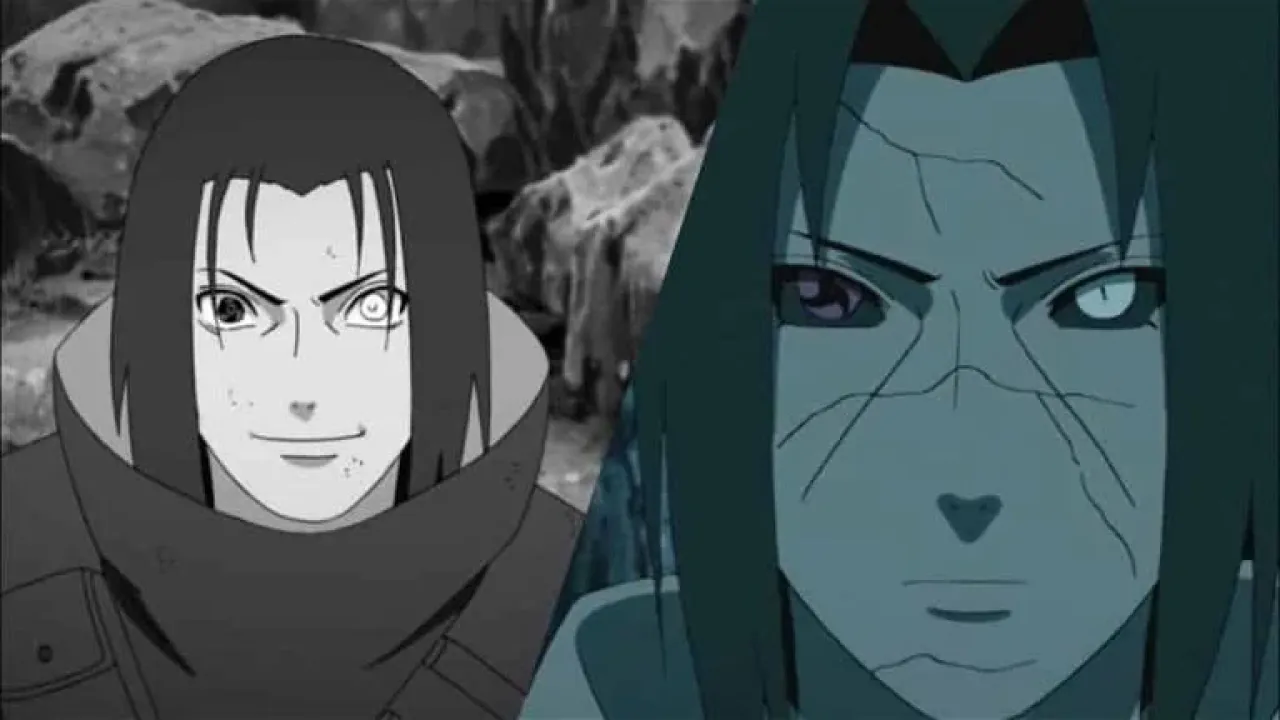
The Sharingan is one of the most iconic and feared abilities in the world of Naruto. This dojutsu, passed down through the Uchiha clan, grants its wielder incredible perception, the power to copy ninjutsu, and the ability to cast high-level genjutsu. But for those who suffer the trauma of losing a loved one, the Sharingan can evolve into an even more fearsome form: the Mangekyou Sharingan. With this evolution comes devastating abilities like Amaterasu, Tsukuyomi, Susanoo, and Kamui. However, such power comes with a terrible price—every use of the Mangekyou’s unique techniques slowly extinguishes the light from the user's eyes, leading to irreversible blindness. The only way to halt this decay and gain "eternal light" is through a rare and often tragic transplant: the birth of the Eternal Mangekyou Sharingan.
The Waning Light of the Mangekyou
When an Uchiha awakens the Mangekyou, their eyes are flooded with chakra, unlocking abilities shaped by their deepest emotions. But this gift is a double-edged sword. The moment the Mangekyou is first used, a seal inside the eye begins to degrade. With each subsequent activation, the pupil’s vibrant pattern slowly fades, and vision deteriorates until the user is left in total darkness. Itachi Uchiha, for instance, was nearly blind by the time he faced Sasuke; he relied heavily on his other senses and sheer willpower. Obito Uchiha, on the other hand, seemingly defied this curse because half his body was composed of Hashirama Senju’s cells, which granted immense regenerative capabilities. But for a pure-blooded Uchiha, blindness was inevitable—unless they turned to the forbidden transplant.
Why Madara Saw Eternal Light So Easily
Madara Uchiha was the first known shinobi to achieve the Eternal Mangekyou Sharingan. According to Itachi, Madara “stole his younger brother’s eyes” after his own sight began to fail. The process seemed absurdly simple compared to later transplants. Why didn’t Madara require a complex surgical procedure? The answer lies in the nature of the Uchiha bloodline and Madara’s own extraordinary chakra. As Indra Ōtsutsuki’s reincarnation, Madara possessed chakra of almost divine potency. This likely allowed his body to accept and integrate the new dojutsu with little more than a basic swap. The eyes of a sibling share nearly identical chakra signatures, and for a reincarnation like Madara, the fusion may have happened almost naturally. In contrast, when Sasuke received Itachi’s eyes, he was placed under a medical procedure and took time to heal, though the transplant still essentially involved replacing his own eyes with Itachi’s. The method is fundamentally the same: one pair of Mangekyou eyes is physically exchanged for another. The difference in "difficulty" is more about the recipient's innate power and the era’s medical knowledge. Madara, at the height of his prime, simply tore out his failing eyes and inserted Izuna’s—an act that would kill a lesser shinobi from shock and chakra rejection.
The Transplant: Blood, Surgery, and the Fusion of Eyes
To obtain the Eternal Mangekyou, an Uchiha must take the Mangekyou eyes of a close blood relative, ideally a sibling. The process is not merely a vision restoration; it fuses the two sets of ocular chakra, creating a new, unique pattern that never fades. The original owner of the transplanted eyes must have awakened their own Mangekyou, which is why the act often involves immense sacrifice—the donor loses their sight entirely, and if they are still alive, they are left with empty sockets. In Sasuke’s case, Obito performed the transplant in a hidden bunker, and Sasuke emerged after a period of bandaged recovery with his brother’s eyes, now displaying an intricate combination of Itachi’s and his own patterns. The new eyes not only restored his sight but also amplified his abilities, eliminating the strain that once caused pain and bleeding. Because the donated eyes are "fresh" and the fusion stabilizes the chakra flow, the Eternal Mangekyou effectively halts the original degenerative effect, granting true eternal light.
Izanagi: Rewriting Reality at a Terrible Cost
Before the Eternal Mangekyou was widely known, desperate Uchiha turned to even more forbidden techniques to cheat fate. Izanagi is a legendary genjutsu that transforms reality into illusion, allowing the caster to alter their personal reality for a brief moment. In practical terms, it can resurrect the dead or undo fatal injuries. Danzo Shimura wielded multiple Sharingan eyes embedded in his arm, each capable of casting Izanagi once, giving him a ten-minute window of invulnerability during his battle with Sasuke. Madara actually programmed a time-delayed Izanagi into his right eye just before his death at the hands of Hashirama, which activated after his burial and allowed him to return to life. Obito used a single Izanagi enhanced by Hashirama’s cells to survive Konan’s six hundred billion explosive tag trap. However, the cost is absolute: once Izanagi is performed, the eye that casts it loses all light and becomes permanently blind. It is a one-shot miracle, a last resort for those who refuse to accept their fate.
Izanami: The Inescapable Loop That Judges the Unworthy
With the power to change reality itself, Izanagi tempted many Uchiha into arrogance, believing they could control destiny. To counter this, the Sharingan gave rise to Izanami, a technique designed to trap those who misuse Izanagi in an endless, looping illusion. Izanami requires the user to record physical sensations from the target using their Sharingan, then recreate those sensations in a closed loop. The target cannot escape until they accept their true self and stop trying to alter reality through deceit. Itachi famously used this forbidden technique against Kabuto Yakushi during the Fourth Great Ninja War. Kabuto, who had modified his body with multiple genetic enhancements and was using Sage Mode, believed he could resist any genjutsu. But Izanami bypassed all defenses because it doesn’t rely on the five senses; it traps the mind in a repeating cycle of events. Like Izanagi, the price is steep—the eye that casts Izanami loses its light forever, leaving the caster half-blind. It is the ultimate gamble, a jutsu that sacrifices one’s vision to teach a lesson.
Who Wields These Forbidden Powers?
The Eternal Mangekyou Sharingan has been achieved by only two known shinobi in history: Madara Uchiha and Sasuke Uchiha. Madara took his brother Izuna’s eyes, while Sasuke took Itachi’s. No other living or deceased Uchiha (including Obito, Shisui, or Itachi) ever attained true eternal light. Obito’s ability to spam Kamui without going blind was a special case due to his Senju DNA, not an Eternal Mangekyou. As for Izanagi and Izanami, any Sharingan user can theoretically perform them, but the techniques are so forbidden that knowledge of them was largely lost. Danzo, a non-Uchiha, stole and implanted multiple Sharingan specifically to use Izanagi. Obito and Madara used it as a trump card. Izanami is even rarer, known only to Itachi and perhaps a few ancient Uchiha who once used it to curb the abuse of Izanagi. The techniques demand not just a Sharingan but a profound understanding of the Uchiha’s tragic history and the willingness to sacrifice one’s own vision.
The Sacrifice: A Price Paid in Light
The world of Naruto consistently reinforces that great power requires great sacrifice. The Eternal Mangekyou forces a sibling to lose their eyes—a symbol of the Uchiha clan’s cycle of hatred. Izanagi and Izanami demand the total loss of an eye’s light, leaving the user permanently disfigured and half-blind. For Danzo, this meant burning through ten eyes in a single fight. For Itachi, casting Izanami cost him an eye but ultimately freed Kabuto from his delusions. The common thread is that the Uchiha’s greatest strengths are always born from their deepest wounds. Whether it’s stealing a brother’s sight to preserve one’s own, or blinding oneself to enforce truth, the Sharingan’s ultimate techniques reflect the clan’s tragic beauty: to see the truth, one must be willing to go blind.
In the end, the Eternal Mangekyou and the forbidden jutsu of Izanagi and Izanami are more than mere power-ups. They are narrative devices that explore themes of legacy, sacrifice, and the fine line between illusion and reality. While the Eternal offers a way out of physical blindness, the moral blindness of those who abuse such power is what Izanami seeks to correct. For fans of Naruto, these eye techniques remain some of the most intricate and emotionally charged concepts in the entire series.