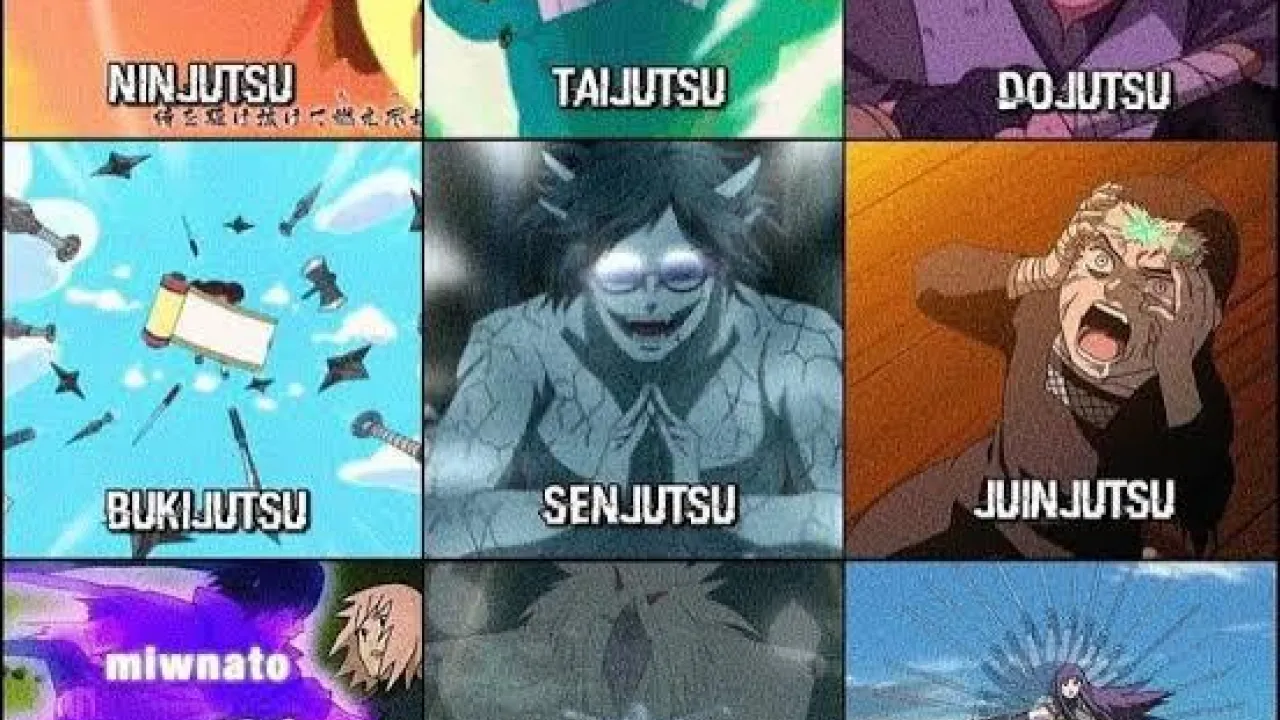
In the sprawling world of Naruto, jutsu are more than just flashy techniques—they are the lifeblood of shinobi combat and the canvas upon which a ninja's creativity and power are painted. From the iconic Shadow Clone Jutsu to the reality-warping Izanagi, the sheer variety of jutsu styles can be overwhelming. Whether you're a seasoned fan or a newcomer, understanding the full spectrum of jutsu categories unlocks a deeper appreciation for Masashi Kishimoto's intricate magic system. This editorial breaks down every major jutsu style, briefly explaining their mechanics, notable users, and role in the ninja world.
The Three Pillars: Ninjutsu, Taijutsu, Genjutsu
All jutsu in Naruto fall into three fundamental categories, often taught at the Academy as the building blocks of a shinobi's skill set. These are the core disciplines, and every technique, no matter how exotic, traces back to one of these roots.
Ninjutsu
Ninjutsu is the broadest category, encompassing any technique that manipulates chakra to create tangible effects beyond the physical body. It includes elemental attacks like the Fireball Jutsu, summoning creatures via contract, cloning oneself, or even altering the environment. Ninjutsu relies heavily on hand seals to shape chakra and is the most common combat style. Its versatility makes it the backbone of shinobi warfare—Naruto's Rasengan and Kakashi's Lightning Blade are prime examples of pure chakra-based ninjutsu.
Taijutsu
Taijutsu ignores chakra manipulation in favor of raw physical prowess, making it the martial arts of the ninja world. While it doesn't produce flashy energy blasts, advanced taijutsu like the Gentle Fist can directly damage an opponent's chakra network, and the Eight Inner Gates can grant godlike strength at the cost of the user's body. Rock Lee and Might Guy are the quintessential taijutsu masters, proving that sheer physical training can rival even the most devastating ninjutsu.
Genjutsu
Genjutsu is the art of illusion, trapping opponents inside elaborate mental constructs by manipulating their chakra flow within the cranial nerves. Unlike ninjutsu, genjutsu attacks the mind, creating false sensations that can paralyze, disorient, or mentally break a target. The Sharingan's hypnotic abilities and Itachi Uchiha's Tsukuyomi represent genjutsu's terrifying potential. Breaking genjutsu requires chakra disruption (often from an ally) or precise self-control.
Elemental Natures: The Five Basic Transformations
Many ninjutsu incorporate one or more of the five elemental chakra natures, adding a layer of strategic depth. Rock, Paper, Scissors-like elemental wheel governs matchups: Fire beats Wind, Wind beats Lightning, Lightning beats Earth, Earth beats Water, and Water beats Fire. Skilled shinobi can learn to change their chakra's nature to wield these elements.
Fire Style (Katon)
Fire Release techniques are destructive and wide-ranging, often used by the Uchiha clan. They range from massive flamethrowers (Great Fireball Jutsu) to precision lances of flame. Fire is strong against Wind but weak to Water.
Wind Style (Futon)
Wind Release slices, grinds, and pushes. It's the rarest nature among Konoha ninja but incredibly potent—Naruto's Wind Style: Rasenshuriken inflicts near-cellular damage. Wind overpowers Lightning but is easily dispersed by Fire.
Lightning Style (Raiton)
Lightning Release is all about speed and piercing power, capable of cutting through almost anything. Kakashi and Sasuke are famous practitioners, with techniques like Chidori and Kirin. Lightning dominates Earth but is countered by Wind.
Earth Style (Doton)
Earth Release excels in defense and battlefield manipulation, allowing users to travel underground, erect stone walls, or create golems. It's a favorite of the Stone Village ninja. Earth is strong against Water but weak to Lightning.
Water Style (Suiton)
Water Release is highly adaptable, used by Mist Village shinobi and the ever-clever Tobirama Senju. It can form massive tidal waves, dense water prisons, or sharp liquid whips. Water extinguishes Fire but struggles against Earth's absorption.
Beyond the Basics: Kekkei Genkai and Combined Natures
Some bloodlines or genetic quirks allow shinobi to mix two or more basic natures, creating entirely new elements known as Kekkei Genkai (or Kekkei Tota when three are combined). These inherited abilities often define a clan's power and cannot simply be learned by outsiders.
- Ice Style (Hyoton) — Combining Wind and Water, ice manipulation is the signature of the Yuki clan, used by Haku to create deadly mirrors.
- Wood Style (Mokuton) — A legendary fusion of Earth and Water, exclusive to Hashirama Senju and his cloned cells. It can suppress tailed beasts and spawn massive forests.
- Lava Style (Yoton) — Fire and Earth produce searing magma or quicklime, seen in Mei Terumi and Roshi.
- Storm Style (Ranton) — Lightning and Water create flowing energy beams that can be guided like laser pointers, favored by Darui.
- Boil Style (Futton) — Fire and Water generate corrosive vapor capable of melting even Susanoo armor, used by Mei Terumi.
- Dust Style (Jinton) — A Kekkei Tota of Earth, Wind, and Fire, this reduces matter to molecular dust; it's the feared ability of the Third Tsuchikage.
- Magnet Style (Jiton) — Wind and Earth allow magnetic control over metallic particles, used by the Kazekage lineage and Toroi.
- Scorch Style (Shakuton) — Fire and Wind conjure deadly heat waves that instantly desiccate enemies, demonstrated by Pakura.
- Explosion Style (Bakuton) — A blast-centric Kekkei Genkai, likely Earth and Lightning, used by the terrorist Deidara.
Other rare natures like Crystal Style (Guren), Dark Style (Hiruko), and Swift Style (the Fourth Raikage's speed-enhancing technique) further expand the elemental palette, though their exact nature combinations are debated.
Specialized Jutsu Disciplines
Beyond elemental and core categories, the ninja world recognizes several high-level or niche jutsu styles that don't fit neatly into the standard framework. These often require unique talents, contracts, or forbidden knowledge.
Space-Time Ninjutsu (Jikūkan Ninjutsu)
Space-time techniques bend the fabric of reality to teleport objects or the user. The Flying Thunder God Technique (Minato's mainstay) and Kamui (Obito's Sharingan ability) are prime examples. They are extremely rare and often categorized as S-rank.
Sealing Jutsu (Fuinjutsu)
Fuinjutsu involves sealing objects, chakra, or even souls into containers, scrolls, or living hosts. The Dead Demon Consuming Seal and the Eight Trigrams Sealing Style on Naruto's stomach demonstrate its immense power. It's a precise, often ritualistic art mastered by few, like the Uzumaki clan.
Medical Ninjutsu (Iryō Ninjutsu)
Medical ninjutsu uses chakra to heal wounds, perform surgeries, or even poison opponents. Tsunade and Sakura excel in this field, with techniques like the Mystical Palm Jutsu and the Creation Rebirth that grants temporary immortality.
Sensory Jutsu
Sensory techniques allow a ninja to detect chakra signatures over vast distances, identify specific individuals, or perceive invisible threats. They can be passive (Haku's ice mirrors) or active (Karin's Mind's Eye of the Kagura). Barrier jutsu often incorporate sensory elements.
Kinjutsu – Forbidden Techniques
Kinjutsu aren't a single style but a classification for techniques deemed too dangerous, unethical, or self-destructive to spread. The Shadow Clone Jutsu is technically forbidden due to its chakra drain, while the Reanimation Jutsu and the Eight Gates Formation are banned for moral or physical risks.
Dojutsu – Eye Techniques
Dojutsu are genetic ocular abilities like the Sharingan, Byakugan, and Rinnegan. They grant innate jutsu like genjutsu mastery, 360° vision, and gravity manipulation that often transcend normal jutsu categories. They typically require no hand seals.
Conclusion: The Beauty of Infinite Possibilities
The taxonomy of jutsu in Naruto is both a rigid school and an artist's toolkit. From the rudimentary Clone Jutsu to the cosmic power of the Rinnegan, every technique reflects a shinobi's lineage, creativity, and sacrifices. Kishimoto's layered system—basic categories, elemental natures, combined transformations, and esoteric arts—ensures that no two ninja fight exactly alike. It's a testament to the series' depth that after 700 chapters, fans still love to dissect and debate the nuances of chakra nature combinations or the ethics of kinjutsu. Whether you're a casual viewer or a devoted analyst, understanding these styles is your first step into true shinobi scholarship.