
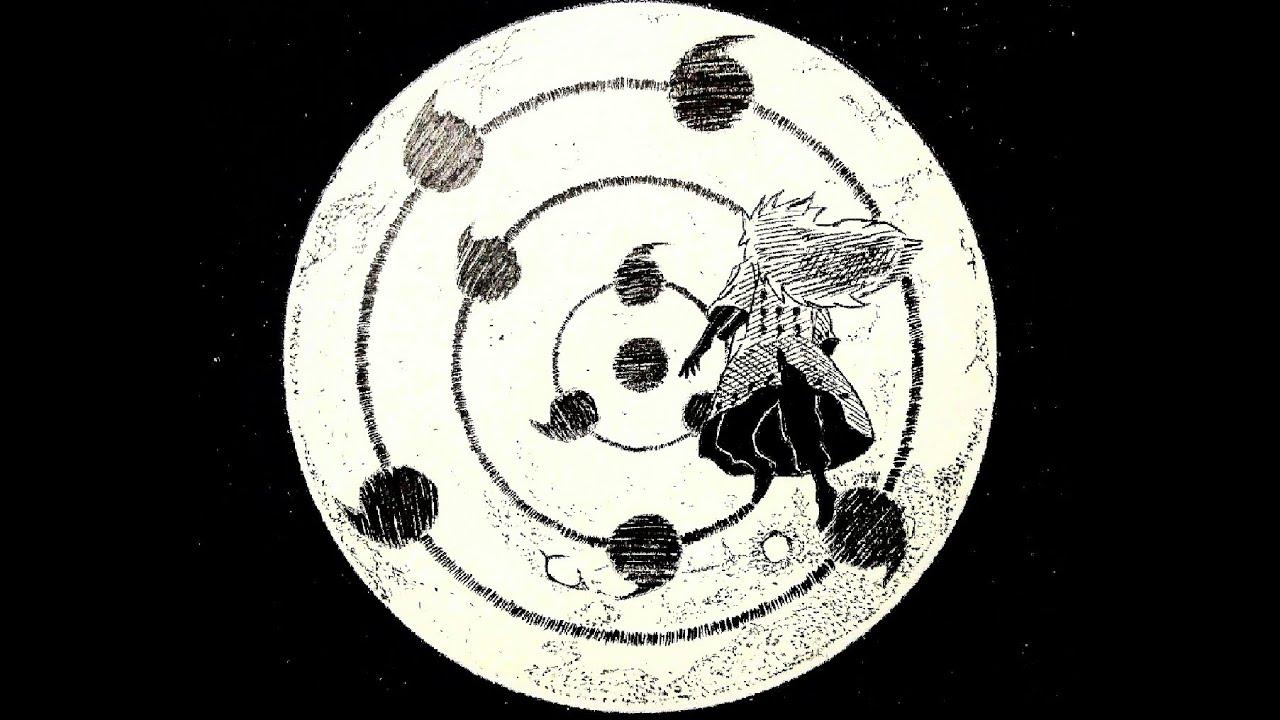
When the final battle of Naruto Shippuden unfolded, fans were glued to their screens as Naruto and Sasuke clashed with the legendary Madara Uchiha. But just as Madara seemed on the verge of victory, the story took a sharp turn: the unexpected emergence of Kaguya Otsutsuki, the progenitor of chakra, who replaced Madara as the final antagonist. While the series concluded with Naruto achieving his dream of becoming Hokage and ushering in an era of peace, some fans never quite made peace with that ending. What if, in an alternate interpretation, Madara’s Infinite Tsukuyomi actually succeeded? What if the entire Boruto series—and perhaps the final moments of Shippuden—are nothing but a shared dream?
This is the heart of one of the most fascinating fan theories to emerge from the Naruto fandom: the idea that Madara won, and the world we see now is his perfect illusion. It’s a theory that not only recontextualizes the entire saga but also offers a compelling answer to many of the narrative inconsistencies that have cropped up in Boruto. And as a long-time fan, I have to admit: part of me wishes it were true.
The Infinite Tsukuyomi’s Perfect Reality
To understand the theory, we first need to recall what the Infinite Tsukuyomi actually does. As the ultimate genjutsu, it reflects off the moon to trap every living being in a dream tailored to their deepest desires. In this dream world, people live out their ideal lives, completely unaware of reality. The world of Naruto, as we knew it before the Fourth Great Ninja War, would have been Madara’s canvas—a place where he could sculpt a utopia without hatred, conflict, or suffering.
In the official timeline, Naruto and Sasuke managed to break free thanks to their Six Paths powers and ultimately defeated Kaguya, ending the illusion. But what if they never actually escaped? What if the moment we believed they broke free was actually part of the dream itself? This is where the theory takes root. In a dream crafted by a master like Madara, it’s entirely plausible that the dreamers wouldn’t realize they’re still asleep—especially if the illusion is designed to feel like a natural progression.
Clues That Suggest a Dream
Look closely at the world of Boruto, and you’ll find eerie signs that something isn’t quite right. The peaceful era that Naruto fought so hard for is plagued by increasingly bizarre threats: godlike Otsutsuki invaders, scientific ninja tools that rival legendary jutsu, and a new generation that seems almost detached from the harsh lessons of the past. The leaps in technology—something that took centuries in the original series—happened in just a couple of decades. Villains appear out of nowhere with world-ending powers, and the narrative often feels like a string of escalating conflicts without the grounded stakes that made Naruto so compelling.
In the context of a dream, these oddities make perfect sense. The Infinite Tsukuyomi would be constantly weaving a reality that fulfills desires but also reflects subconscious fears. Naruto’s desire for peace might manifest as a world where his son can live carefree, but the lingering trauma of war manifests as new, otherworldly enemies. The Otsutsuki, with their alien roots and ties to the chakra fruit, could be a distortion of the real Kaguya myth, twisted by the dream logic. Even character behavior is off: Naruto, once an underdog with endless empathy, is often criticized as a neglectful father—perhaps a reflection of his own insecurities as a Hokage who never knew his parents well.
Furthermore, the original ending of Naruto Shippuden already felt rushed and disjointed to many. Kaguya’s sudden appearance and Madara’s unceremonious defeat left fans with a sense of unresolved tension. The dream theory elegantly resolves that: Madara was the true final villain all along, and the abrupt shift to Kaguya was merely a glitch in the matrix, or a desperate attempt by the dreamers’ minds to reject the illusion.
Why This Theory Is So Compelling
On a thematic level, the theory makes Madara’s philosophy chillingly successful. He believed that true peace could only be achieved by putting everyone in a genjutsu, freeing them from the cycle of hatred. If he actually succeeded, then the entire Boruto series becomes a testament to both his victory and the hidden costs of such a peace. It forces us to ask: Is a “perfect” world a lie worth living? Are we, the audience, complicit in enjoying a story that might be nothing more than a pleasant dream?
It also restores Madara as the ultimate antagonist. For many fans, Madara’s build-up over the years was far more satisfying than Kaguya’s last-minute reveal. The dream theory allows his planning and power to pay off in the most unexpected way. Naruto and Sasuke’s final battle at the Valley of the End? That might have been the last real moment in the entire timeline—a fitting, ambiguous end to their rivalry that leaves the truth forever in question.
My Personal Take: Why I’d Love This to Be True
As someone who grew up with Naruto, I’ve always had a soft spot for Madara’s character. He’s a tragic figure, driven by a twisted sense of love for the world that rejected him. The idea that he actually won—that his plan succeeded against all odds—is darkly poetic. It adds a layer of complexity to the series that Boruto, with its somewhat divisive direction, often lacks.
More than that, the dream theory gives me a personal escape hatch as a fan. Whenever Boruto introduces a plot point that feels like it betrays the spirit of the original—like aliens suddenly dictating the fate of the shinobi world, or power scaling that makes the Sannin look like academy students—I can simply remember: this is all a dream. It doesn’t have to make perfect sense. It’s Madara’s grand illusion, and we’re all just watching it play out.
I’ll be the first to admit that this isn’t canon. Masashi Kishimoto, and the creators of Boruto, have their own vision. But that’s the beauty of fan theories: they invite us to read between the lines and find new meaning. And honestly? I’d love it if, decades from now, a secret chapter revealed that Naruto has never truly woken up from the Infinite Tsukuyomi. It would be the ultimate twist—one that redefines an entire generation’s favorite story.
A Dream Worth Entertaining
Whether you see Boruto as a worthy successor or a misstep in the Naruto legacy, the dream theory offers a fun and thought-provoking lens through which to view it. It reminds us that Naruto’s world is rich enough to support endless interpretation. Maybe the true power of the Infinite Tsukuyomi isn’t just trapping characters in a dream—it’s trapping us, the fans, in one too. And if that’s the case, I’m not sure I want to wake up.