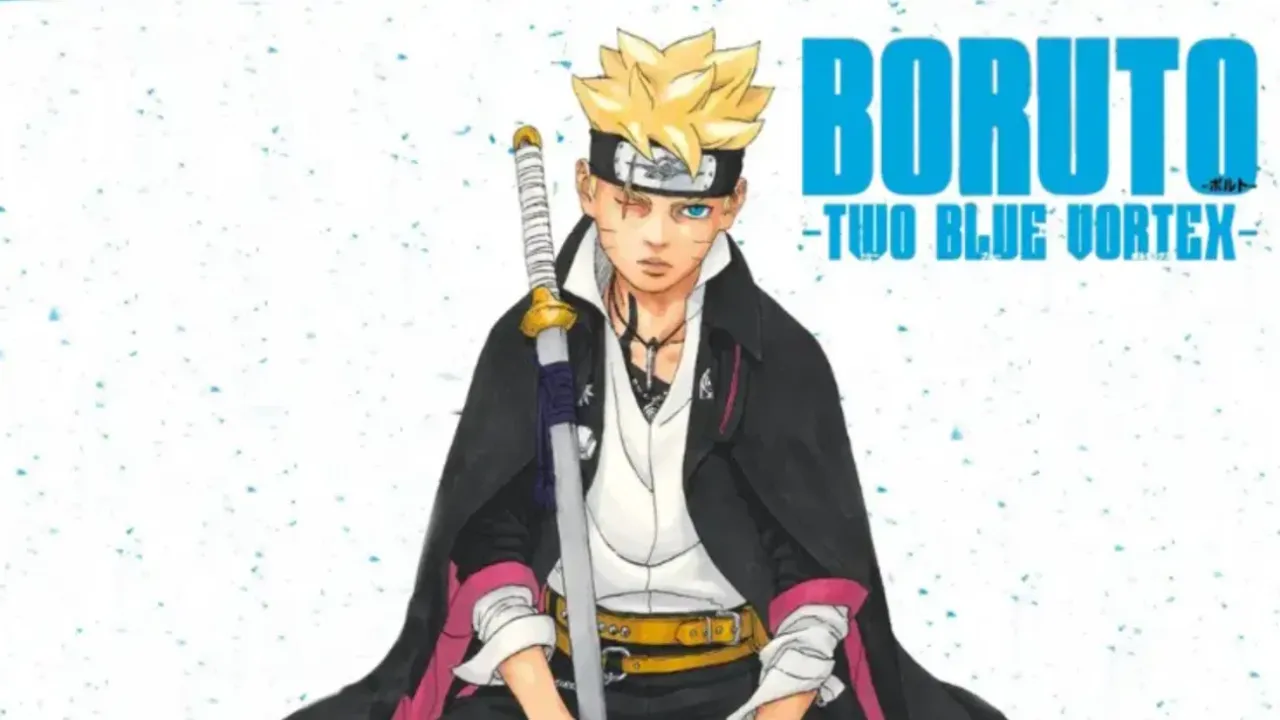
The Boruto series has been a rollercoaster of emotions and surprises, but nothing could have prepared fans for the bombshell that is Boruto: Two Blue Vortex. The timeskip manga kicked off with a bang, reintroducing a grown-up Boruto Uzumaki sporting a scar, a cloak, and a deadly new jutsu that left the community buzzing: the Rasengan Uzuhiko. In this editorial, we'll dive deep into everything we know about Boruto's latest incarnation and the mystery surrounding his planet-rotating Rasengan, while exploring the most compelling theories about what lies ahead.
Boruto's Timeskip Return: A Rogue Shinobi Emerges
After the devastating events that led to Naruto and Hinata being sealed away by Kawaki, Boruto was forced to flee Konoha, branded as a traitor. The world believed he had killed the Hokage. In Two Blue Vortex, three years have passed, and Boruto returns to the Hidden Leaf under dire circumstances. Code, armed with his Claw Marks and a thirst for revenge, attacks the village, targeting Sarada. Boruto arrives just in time, clad in a red-and-black cloak reminiscent of his mentor Sasuke, wielding a blade and an air of confidence that speaks volumes about his growth.
His appearance alone tells a story: a scar over his right eye, a symbol of past losses, and a demeanor that mixes Sasuke's calm intensity with Naruto's resolve. It's clear that his time away was spent honing his skills, potentially with the guidance of Kashin Koji and the legacy of the Otsutsuki. But the true star of his comeback was a technique no one saw coming.
The Rasengan Uzuhiko: Borrowing the Planet's Rotation
In a stunning display against Code, Boruto unveiled the Rasengan Uzuhiko. Unlike the traditional Rasengan, which relies on the user's chakra rotation, Uzuhiko taps into the very rotation of the Earth. Boruto forms a standard Rasengan in his palm, then expands it into a massive sphere of swirling energy that engulfs the target. But the real terror is the aftermath: as he explained, once hit, the victim is subjected to an unceasing rotational force that makes them feel the planet spinning. Code was left disoriented, unable to stand straight, as the jutsu continued to torment him with no visible damage—only the constant, maddening sensation of being rotated.
Boruto stated that the effect would persist until the Earth stopped spinning or the target died, making it a brutal, persistent attack. This is a technique born from understanding nature energy or perhaps Otsutsuki wisdom, marking Boruto's growth as a shinobi who can weaponize planetary phenomena. It's reminiscent of Senjutsu but evolved into a unique form of Rasengan that blurs the line between jutsu and a curse.
What We Know About Boruto's New Powers
Beyond Uzuhiko, Boruto has shown a formidable arsenal. He retains the Karma seal, which he can now use with greater mastery, allowing him to absorb jutsu and enhance his physical abilities without immediately losing control to Momoshiki. His battle against Code demonstrated lightning-fast reflexes, space-time manipulation inspired by the Flying Thunder God technique (possibly a gift from Koji), and the ever-reliable Shadow Clone Jutsu. He also carries a sword, implying proficiency in kenjutsu—another nod to Sasuke's influence.
Momoshiki still lurks within, but Boruto seems to have reached a fragile equilibrium. The prophecy that "those blue eyes will take everything from you" looms over him, hinting that his greatest challenge is internal. His use of Uzuhiko suggests he may have accessed a deeper connection to the planet's chakra or even the Otsutsuki god's power, but the exact source remains ambiguous.
Theories and Unanswered Questions
As with any timeskip, the manga has left plenty of gaps for fans to theorize. Here are the burning questions:
Will the Jougan finally appear? Boruto's mysterious eye, glimpsed in the anime and early manga, has been notably absent in Two Blue Vortex. Many believe it will awaken as his trump card, possibly tied to Momoshiki's prophecy. Could it be the key to countering the Otsutsuki threat?
What is the true nature of Rasengan Uzuhiko? Is it purely a scientific ninja tool-style jutsu based on planetary physics, or does it draw on Senjutsu or even Otsutsuki chakra? Some theorize it's a prototype for an even greater spatial Rasengan, perhaps the "Vanishing Rasengan" evolved.
How will Boruto's relationship with Kawaki evolve? The title Two Blue Vortex likely references the two blue-eyed protagonists, Boruto and Kawaki, now locked in a tragic conflict. Will they reconcile, or is a fatal clash inevitable?
What is Kashin Koji's role? Koji's involvement in training Boruto opens possibilities about Jiraiya's legacy and the secret of the Ten Directions. Could he be connected to Uzuhiko's creation?
Will Sarada's Mangekyo Sharingan change the game? Sarada's awakening in the previous arc grants her immense potential. How will she fit into Boruto's fight against Code and the Otsutsuki?
Finally, the thematic significance of "Two Blue Vortex" cannot be ignored. The vortex symbolizes not only the Rasengan but the swirling chaos of Boruto and Kawaki's intertwined fates, pulling everything into an inevitable collision. As Momoshiki foretold, Boruto's blue eyes may lead to loss, but perhaps the second vortex—Kawaki—will be the catalyst for salvation or ruin.
Conclusion: A Vortex of Possibilities
Boruto: Two Blue Vortex has ignited the fandom with a perfect blend of nostalgia and innovation. Boruto's Rasengan Uzuhiko is a testament to the series' creativity, turning a classic into something entirely new. As we wait for the manga to unfold, one thing is certain: the next chapters will delve deeper into Boruto's evolution, the Otsutsuki legacy, and the destiny that binds him to his own destruction. Whether Uzuhiko is just the beginning or the peak of his power, the blue vortex is only getting started.