
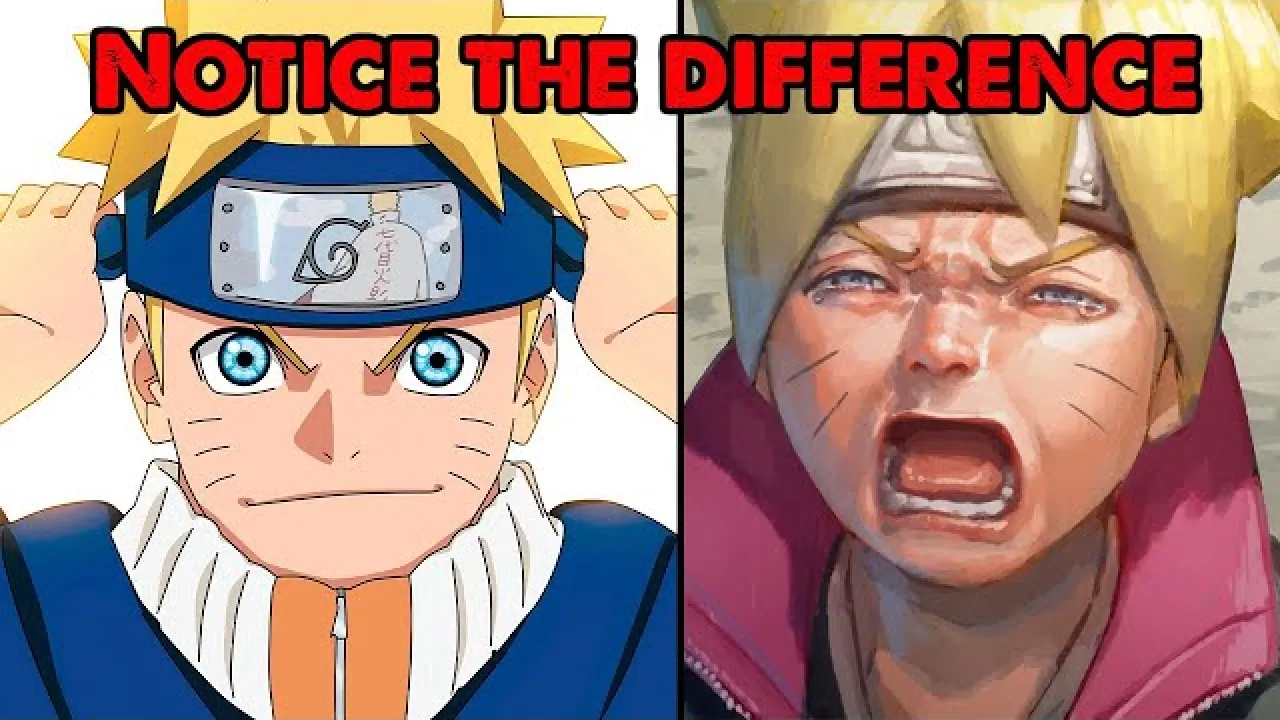
Like millions around the world, I grew up with Naruto Uzumaki—the knucklehead ninja who taught us that hard work and perseverance could overcome any obstacle. The world of shinobi was rich with clever tactics, bloodline legacies, and emotional depth. So when Boruto: Naruto Next Generations was announced, I was eager to see how the next generation would carry the torch. But after watching the series unfold, I can’t help but feel a profound sense of loss. Boruto is, for me, a massive disappointment that has stripped away everything that made Naruto special.
The Unlikable Hero: Boruto Uzumaki
One of the biggest hurdles right from the start is the protagonist himself. Boruto Uzumaki comes across not as a flawed-but-lovable underdog, but as a spoiled brat who resents his father for being Hokage. Instead of inspiring empathy, his constant whining and arrogant attitude make him incredibly difficult to root for. Unlike young Naruto, who was ostracized yet remained optimistic, Boruto has a loving family, genius-level talent, and all the privileges his father never had—and still he acts like a victim.
The Chunin Exam arc crystallized my disdain. Boruto blatantly cheats by using the Scientific Ninja Tool, disrespecting the very concept of honest effort that his father embodied. While the narrative frames this as a flaw to overcome, the damage was done. Then comes the unearned power-ups: the mysterious Jogan eye, the Karma seal—abilities handed to him on a silver platter with minimal struggle. It feels like the antithesis of the Naruto journey where every victory was earned through blood, sweat, and tears.
The Death of Strategy and Clan Identity
The deeper I got into Boruto, the more I realized the world I loved had been fundamentally broken. In Naruto, clan heritage mattered. The Hyuga’s Gentle Fist, the Aburame’s insects, the Nara’s shadow techniques—each battle was a chess match of unique abilities. Today, that tactical brilliance is almost extinct. If you don’t possess Otsutsuki-level power or a cyborg’s enhancements, you are practically irrelevant. The series has abandoned its ninja roots in favor of overblown, god-like clashes that feel hollow.
Even Naruto himself, once the symbol of tireless determination, has been reduced to a paperwork-burdened bureaucrat who seems to have lost his fire. The smiling, mischievous boy who would chase impossible dreams now sits behind a desk while his son grows resentful. The mission-oriented, field-veteran vibe that defined lifetimes of shinobi culture has been replaced by a mundane office routine. It’s a tragic, uninspiring evolution of a beloved hero.
Sasuke Uchiha: From Legend to Deadbeat Dad
No character in the series pains me more than Sasuke Uchiha. In the original run, he was the most captivating, complex anti-hero—a prodigy haunted by trauma, driven by vengeance, and yet capable of deep bonds. I waited years to see him mature into a man who would rebuild his clan and find redemption. What I got instead was a hollow shell.
Sasuke has failed spectacularly as a father and husband. He is perpetually absent, leaving his daughter Sarada to wonder if he is even her real parent. I understand his reserved nature, but that doesn’t excuse neglecting his family for years on end. And from a combat perspective, he has been utterly defanged. The loss of his Rinnegan was a cheap narrative punch, stripping him of strategic options and making him a side character in his own story. Even his design is a shadow of Shippuden’s elegance—the rugged, wanderer look lacks the dark charisma that once defined him. The Sasuke I admired is gone, replaced by a tired, broken man who feels more like a plot device than a character.
The Uchiha Clan’s Bleak Future
Sasuke’s entire life mission was to avenge his brother Itachi and resurrect the Uchiha clan. Now, with only one daughter, that legacy hangs by a thread. Sarada is the sole remaining Uchiha capable of continuing the bloodline. If she marries and takes another surname—or, worse, perishes in the battles ahead—the Uchiha name will vanish from history. Even if she has children, their Uchiha blood would be diluted to just one-quarter, raising serious doubts about whether the Sharingan—a kekkei genkai that requires strong genetic concentration—could ever appear again. It’s a tragedy that undermines everything Sasuke fought for, and it makes me fear that Kishimoto is content to let the legendary clan fade into obscurity.
A Glimmer of Hope for Two Blue Vortex?
Despite all this, I remain a fan at heart. With the Two Blue Vortex timeskip, there’s a faint chance that Masashi Kishimoto can course-correct. The older Boruto shows more maturity, and the stakes have been raised dramatically. Perhaps we’ll see a return to strategic combat, a redemption arc for Sasuke’s family life, or a restoration of the classic clan dynamics. I want to believe that the creator who gave us the Zabuza arc and the Pain invasion can recapture that magic. But so far, my hope is tentative, and each new chapter tests my loyalty. The Boruto series has, in my eyes, lost its identity—and winning back disillusioned fans will require a narrative miracle.